
Reward Charts vs. Wearable Reward Systems for Children
5 min read
Reward charts have existed for decades, and for good reason: making effort visible works. Generations of parents, teachers and therapists have used a grid of squares and a sheet of stickers to help a child see their own progress.
The limitation was never the idea. It was the location. A traditional reward chart stays on a wall or a refrigerator door. It only exists in one room, and progress is only visible when everyone happens to be standing in that room at the same time.
Typically, kids don't stay in one place. They move between different rooms at home, go to school or daycare, go on outings, visit their grandparents, or spend time in the car. The moments most worth reinforcing usually happen somewhere the chart isn't.
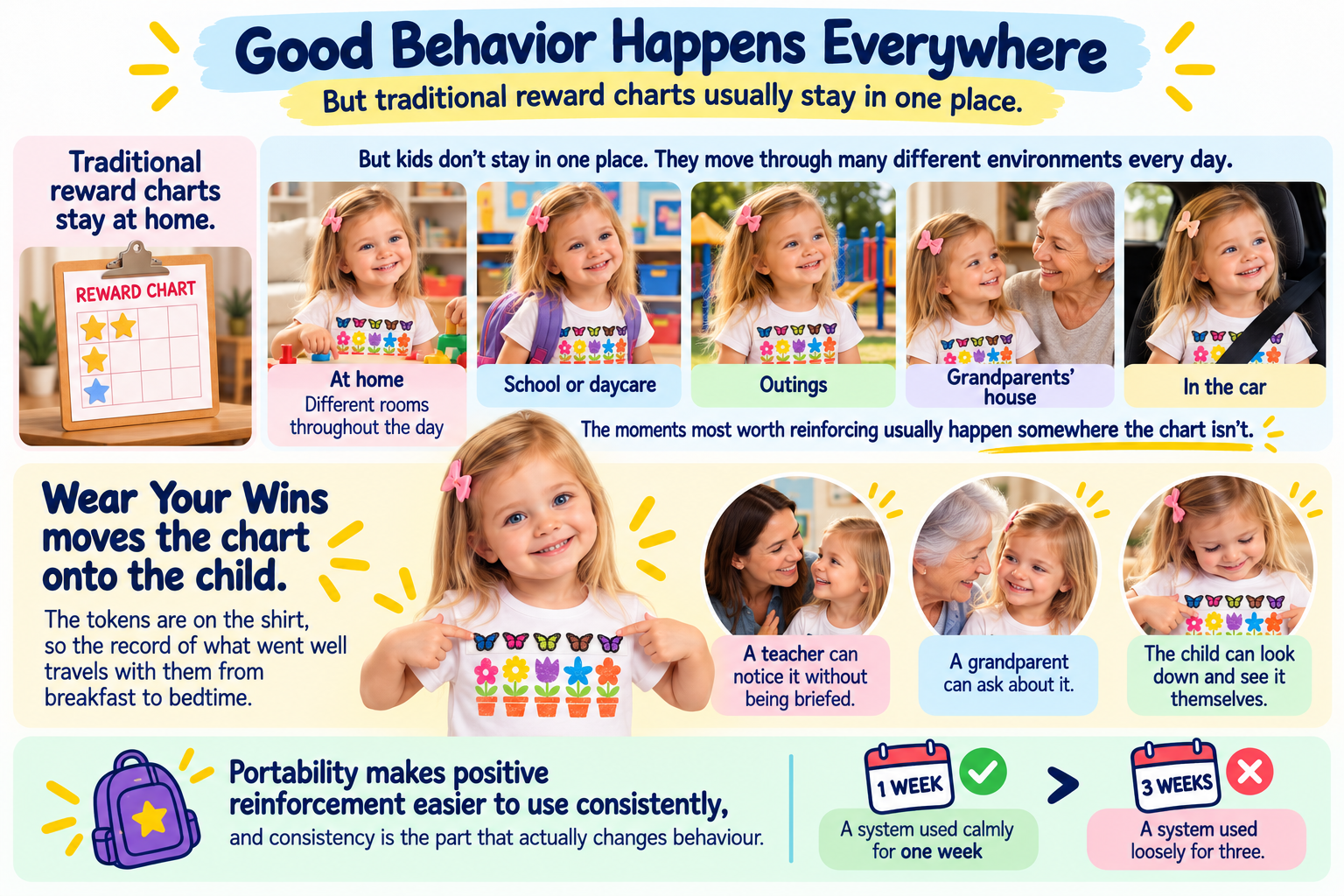
Wear Your Wins moves the chart onto the child. The tokens are on the shirt, so the record of what went well travels with them from breakfast to bedtime. A teacher can notice it without being briefed. A grandparent can ask about it. The child can look down and see it themselves.
Portability is what makes positive reinforcement easier to use consistently, and consistency is the part that actually changes behaviour. A system used calmly for one week beats a system used loosely for three.
We recommend starting with 5 tokens and one goal. Small enough that success happens on day one, visible enough that everybody around the child gets to celebrate it.
A wearable reward system can also become part of the play itself. Once a child earns their tokens, they can move them around the shirt, create different patterns, or use them as part of songs and familiar activities. For example, on the Duck-design T-shirt, the five tokens can become part of singing Five Little Ducks, with the child removing tokens as the song progresses. The shirt itself can also be something the child enjoys wearing, with cute, unique designs that make the reward system feel more personal and engaging. Instead of being just a place to record progress, the shirt can become something the child interacts with, plays with, and looks forward to using.
Sing-Along 5 Little Ducklings song 🐥🎶 (Earn Your Tokens & Sing!)
Ready to try it at home?
A starter kit includes a shirt and a full set of reward tokens.
Shop starter kits