
Why Reward Systems Work for Children
6 min read
A reward system works because it makes something invisible visible. Effort, follow-through and small acts of independence usually pass without comment in a busy household. A token turns that moment into something a child can point to.
The mechanism is simple: a behaviour happens, it is noticed immediately, and something positive follows. Over time the child begins to associate the routine itself with success rather than with nagging.
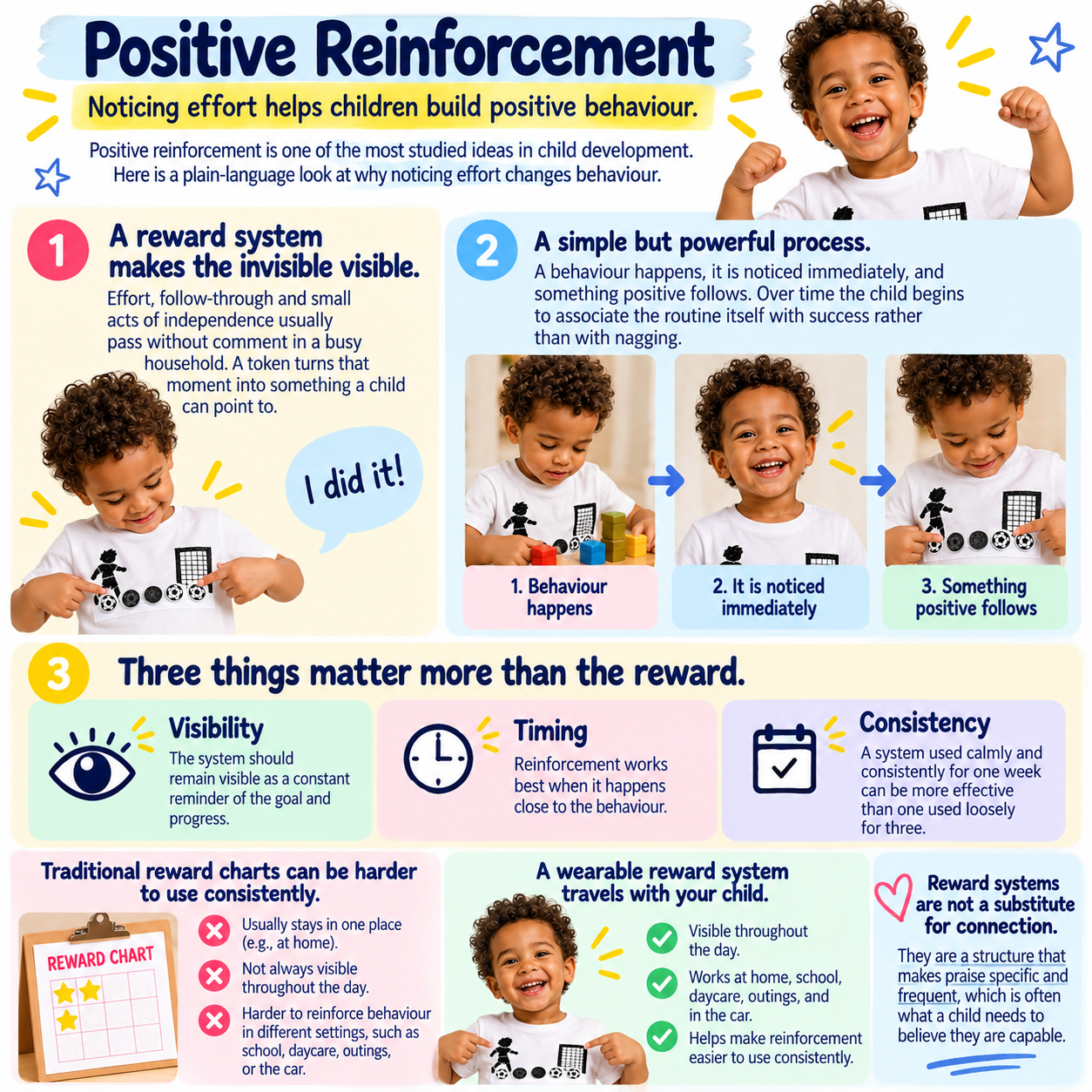
Three things matter more than the reward:
1- The first is visibility — the system should remain visible as a constant reminder of the goal and progress.
2- The second is timing — reinforcement works best when it happens close to the behaviour.
3- The third is consistency — a system used calmly and consistently for one week can be more effective than one used loosely for three.
Traditional reward charts can lose some of their effectiveness because they aren't always visible. A laminated chart typically stays in one place and isn't necessarily carried from room to room, school, daycare, outings, or other settings. When the system isn't available where the behaviour happens, it can be harder to reinforce positive behaviour consistently.
Reward systems are not a substitute for connection. They are a structure that makes praise specific and frequent, which is often what a child needs to believe they are capable.
Ready to try it at home?
A starter kit includes a shirt and a full set of reward tokens.
Shop starter kits